
When families find themselves wrestling with the challenge of making their cramped hallways feel more spacious and welcoming, the answer often lies not in knocking down walls or major structural changes, but in the strategic use of colour. The bold pairing of black and white has emerged as one of the most powerful tools in contemporary interior design, particularly when it comes to transforming those awkward transitional spaces that connect our homes. Whether you’re dealing with a Victorian terrace’s narrow corridor or a modern flat’s slender entry way, incorporating black and white stairs and dramatic contrasts can completely revolutionise how these spaces feel and function.
The psychological impact of this monochromatic approach extends far beyond mere aesthetics. Black signifies simplicity and functionality whilst creating a captivating interplay of light and dark when paired with lighter hues, whilst white symbolises purity, cleanliness, and openness, working particularly well in small spaces to create the illusion of spaciousness. This combination doesn’t simply make hallways look more attractive; it fundamentally alters how we perceive and navigate these essential connective spaces in our homes.
The Science Behind Visual Drama
Understanding why black and white contrast works so effectively in narrow spaces requires delving into the fundamental principles of visual perception and spatial psychology. The contrast between black and white can make even the smallest space stand out, creating visual impact that draws attention to architectural details whilst making the area feel more defined. This isn’t merely decorative flourish; it’s rooted in how our brains process visual information and spatial relationships.
The interplay between these opposing tones creates what designers call “visual tension” – a dynamic relationship that keeps the eye engaged whilst simultaneously making spaces appear larger than their actual dimensions. When paired with lighter hues, black creates a dynamic atmosphere through contrast, whether in a black-and-white colour scheme or combined with metallic accents. This tension works particularly well in hallways because it transforms what might otherwise be perceived as dead space into an active, engaging environment that serves as a dramatic prelude to the rooms beyond.
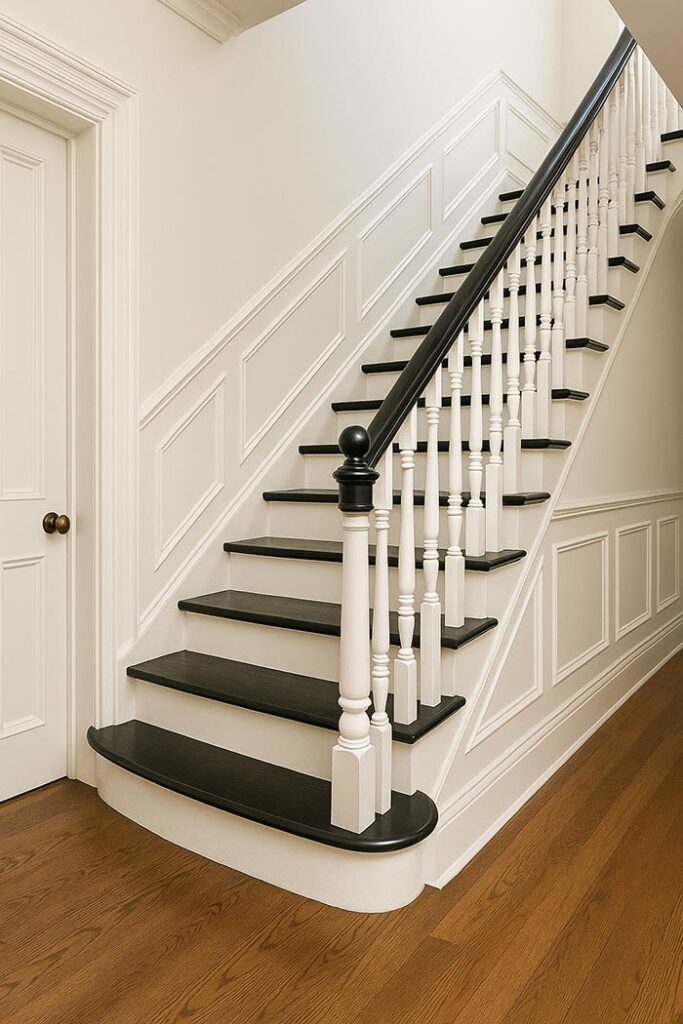
Strategic Placement for Maximum Impact
The key to successfully implementing black and white contrast in narrow hallways lies not in the colours themselves, but in their strategic placement and proportion. Professional designers consistently emphasise that too much black can feel heavy in a small space, while too much white might feel stark, making balance the critical factor in achieving the desired dramatic effect without overwhelming the space.
Contrasting the walls and floor through white walls paired with black floor tiles or a black and white patterned runner creates visual interest, whilst black skirting boards break up the space whilst maintaining a sophisticated look. This approach creates horizontal lines that can actually make narrow hallways appear wider, countering the natural tendency for such spaces to feel cramped. The strategic use of black elements at floor level anchors the space whilst the white walls reflect available light, creating an optimal balance between drama and functionality.
Lighting: The Make-or-Break Element
Perhaps no aspect of black and white hallway design is more crucial than lighting, as it determines whether your dramatic contrast enhances or diminishes the space. When lighting a narrow hallway, it is key to draw the eye level up to help make the hallway appear more spacious, with beautiful simple and long wall lights recommended over floor lamps or console table lighting. This upward direction of light works particularly well with black and white schemes because it enhances the contrast whilst creating the illusion of height.
The relationship between artificial lighting and monochromatic colour schemes is particularly important because black absorbs light whilst white reflects it. A large mirror positioned opposite a light source can double the amount of light in the hallway, whilst high-shine console tables, lacquered paint on sideboards, or shelving will be effective at bouncing light around. This principle becomes even more critical in black and white spaces, where the interplay between absorption and reflection can either create stunning visual effects or result in awkward dark spots that diminish the overall impact.
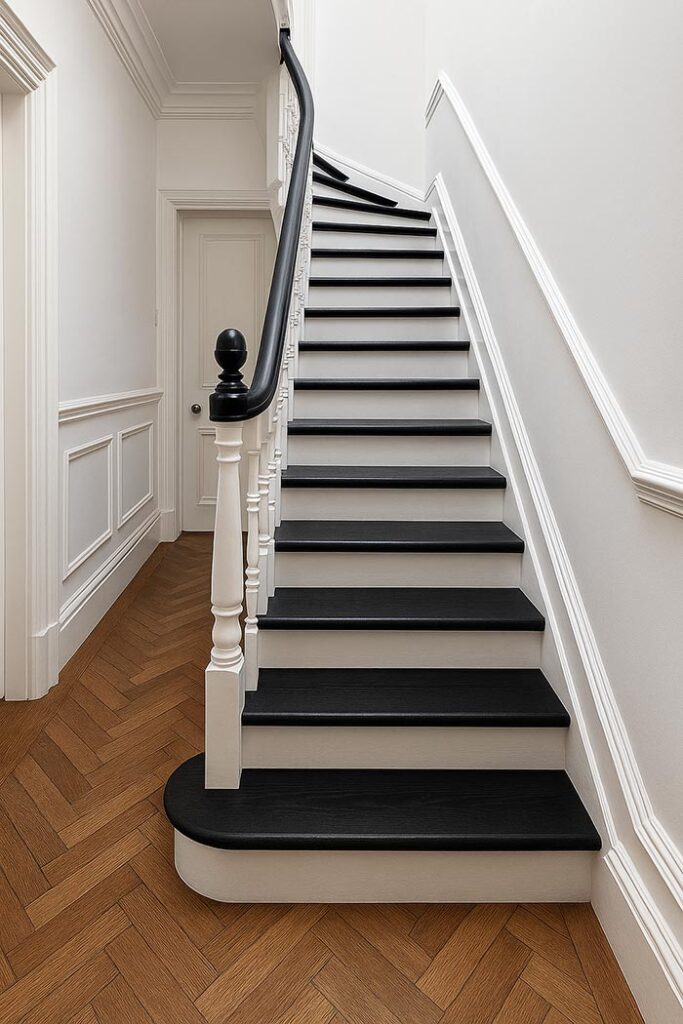
Incorporating Pattern and Texture
Moving beyond simple colour blocking, the most successful black and white hallway designs incorporate pattern and texture to add layers of visual interest without cluttering the space. Chequered tile hallways create a stylish feature that turns clean, open spaces into something that exudes personality, demonstrating how pattern can transform utilitarian areas into design statements.
The key to incorporating patterns successfully lies in understanding scale and rhythm. Large-scale patterns, such as dramatic black and white stripes or oversized geometric designs, can actually make narrow spaces feel wider by creating horizontal emphasis. Conversely, smaller patterns like classic chequerboard tiles or subtle geometric wallpapers add texture and interest without overwhelming the space. Monochrome artwork in black frames with white artwork or photographs creates a cohesive look without overwhelming a small space, providing an additional layer of pattern that enhances rather than competes with the overall design scheme.
Balancing Warmth and Drama
One of the most common concerns about black and white hallway designs is the potential for creating spaces that feel cold or unwelcoming. However, skilled designers have developed numerous strategies for maintaining the dramatic impact whilst introducing elements of warmth and comfort. Light grey carpets or runners can soften the contrast between black and white whilst adding warmth to the hallway, whilst soft grey walls as a backdrop with black accents like doors or skirting boards create a more balanced and neutral feel.
The introduction of natural materials provides another avenue for warming black and white schemes without compromising their dramatic impact. Lighter-toned oak flooring is an excellent option to brighten the area and create a more open feel, with wide, extra long planks further enhancing the sense of space by reducing the number of visible joints. These natural elements bridge the gap between the stark contrast of black and white whilst maintaining the sophisticated, contemporary feel that makes these colour combinations so appealing.
Modern Applications and Current Trends
The contemporary approach to black and white hallway design reflects broader trends towards bold, confident interior choices that prioritise visual impact over safe, neutral schemes. Bold colors and statement-making choices are replacing neutral tones and bland beige walls, with homeowners opting for dramatic contrasts that add excitement to their hallways. This shift represents a fundamental change in how we think about transitional spaces, viewing them not as afterthoughts but as opportunities for dramatic design statements.
Glass and black metal accents complementing white walls create monochromatic contrast that is sophisticated, modern, and sleek, demonstrating how contemporary materials can enhance traditional black and white colour schemes. The integration of modern elements like industrial-style lighting fixtures, minimalist furniture, and architectural details allows these classic colour combinations to feel fresh and current rather than dated or overly formal.
The transformation of narrow hallways through black and white contrast represents more than a simple decorating choice; it’s an approach that fundamentally changes how we experience and move through our homes. By understanding the psychological impact of these colours, strategically placing them for maximum effect, and carefully considering lighting and proportion, families can create hallways that serve as dramatic, welcoming transitions between the various spaces of their homes.
The enduring appeal of black and white lies in its versatility and timelessness, but its true power in narrow hallways comes from its ability to create visual drama whilst actually making spaces feel larger and more defined. As homeowners continue to seek ways to maximise the impact of every square foot, the strategic use of black and white contrast offers a sophisticated solution that delivers both immediate visual impact and long-term design satisfaction. Whether you’re working with a cramped Victorian corridor or a modern apartment’s narrow entry, these principles provide a roadmap for transforming challenging spaces into dramatic design features that enhance rather than hinder the flow of daily life.