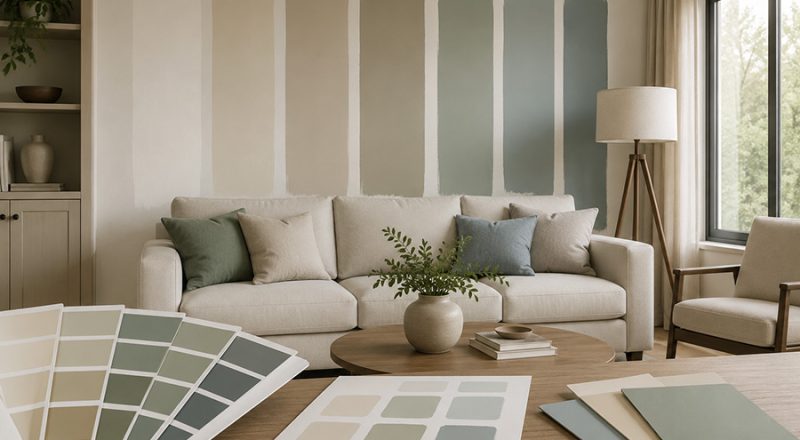
A living room says something before anyone speaks a word in it. The walls, the light, and the mood in the air shape how a family gathers, relaxes, and spends its evenings together. Choosing living room colors is rarely just a matter of taste; it is a quiet decision that influences comfort, energy, and even how peaceful an afternoon nap can feel. For parents balancing busy schedules and growing households, the right shade on the wall can turn a chaotic room into a calm retreat.
Interior designers who work with color every day agree on one thing: there is no single perfect shade for every home. What matters most is how a color interacts with natural light, furniture, and the daily rhythm of the people who live there. This year, the shift toward warmer, softer tones reflects a broader desire for spaces that feel grounded rather than sterile, inviting rather than showroom-perfect.
Warm Neutrals That Never Go Out of Fashion
Soft, warm whites and gentle beige tones remain a dependable starting point for most living rooms. Unlike stark, cool whites, these warmer shades soften under lamp light in the evening and stay welcoming even on grey days. They create a calm backdrop that lets furniture, artwork, and family photographs stand out rather than compete for attention.
Designers often favor a particular warm off-white because it adapts smoothly across different lighting conditions throughout the day. In a household with children running between rooms and toys scattered across the floor, a forgiving neutral like this hides everyday wear far better than a cooler, sharper shade would.
When Bold Color Earns Its Place
Not every living room benefits from restraint. A growing number of homeowners are choosing deeper, more expressive shades such as muted teal, sage green, or deep navy to give a room personality. These colors work particularly well when a family wants the living room to feel distinct from the rest of the home, a space with its own quiet identity.
Darker and richer colors demand a little more planning than a simple neutral. A deep navy or charcoal wall photographs beautifully but needs strong natural light or warm lamps to avoid feeling heavy once evening falls. Pairing a bold wall with natural wood furniture, cream textiles, or soft linen curtains keeps the room feeling balanced rather than closed in.
Reading the Light in Your Own Home
Every living room has its own relationship with daylight, and that relationship changes throughout the day. A room facing north tends to receive cooler, bluish light, which can make certain shades look flat or slightly cold. A room facing south is often flooded with warm sunlight for most of the day, which allows cooler greens and blues to stay balanced rather than washed out.
Lamps and overhead lighting matter just as much as sunlight once evening arrives. Warmer bulbs tend to preserve the coziness of a chosen color, while colder, bluish bulbs can make the same wall look unexpectedly harsh after dark. Testing a shade under both daylight and lamp light before committing helps avoid a disappointing surprise once the sun goes down.
Testing Before You Trust a Color
A small paint chip under bright store lighting rarely resembles how a color will actually look at home. Painting a large sample directly onto the wall, ideally in a section at least the size of a dinner tray, gives a far more honest picture. Living with that sample for a few days, rather than deciding after a single glance, reveals how a shade behaves through morning, afternoon, and evening light.
For households with young children or pets, the finish matters almost as much as the color itself. A slightly glossier finish, such as eggshell or satin, wipes clean far more easily than a flat matte surface, which tends to show every mark and smudge over time. Choosing a durable finish now can save a great deal of frustration later.
Bringing It All Together
Choosing the right color for a living room is less about following trends and more about understanding how a family actually uses the space. The most successful choices tend to balance personal taste with practical realities: the direction a room faces, the amount of natural light it receives, and how much daily wear the walls need to withstand.
There is no need to rush this decision. A living room is lived in every single day, through quiet mornings and noisy evenings alike, so it deserves a color that feels right in every kind of light. Taking the time to test, observe, and live with a few options before committing often makes the difference between a room that merely looks nice and one that truly feels like home.