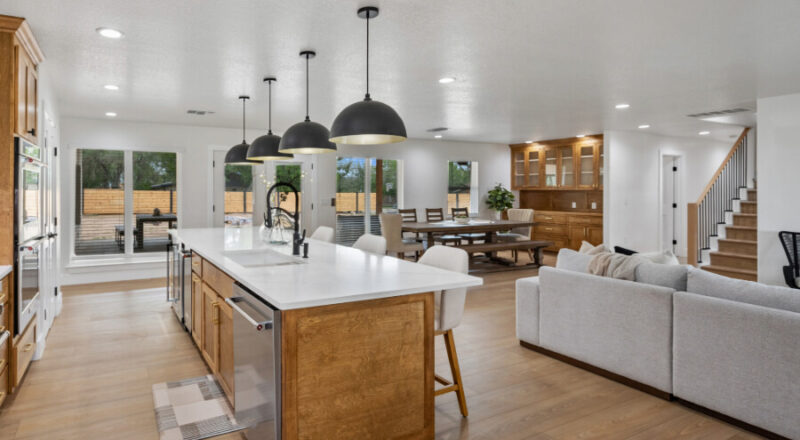
The kitchen remains the heart of family life, where morning routines unfold and evening meals bring loved ones together. Yet traditional Kitchen Lighting approaches often leave homeowners juggling switches, struggling with dim corners during food preparation, or forgetting to turn lights off before heading to bed. These daily frustrations have sparked an intelligent revolution that’s transforming how British families illuminate their most cherished spaces.
What began as simple automation has evolved into sophisticated systems that learn household patterns, respond to natural light levels, and dramatically reduce energy consumption. Today’s smart kitchen lighting represents more than technological advancement—it’s about creating environments that anticipate family needs whilst contributing to sustainability goals that matter to parents and children alike.
Illuminating the Kitchen Revolution
Modern smart kitchen lighting systems have transformed the fundamental relationship between homeowners and their spaces. These intelligent networks combine sensors, wireless connectivity, and artificial intelligence to create lighting environments that respond intuitively to daily rhythms. Smart lights with built-in sensors turn lights on only when someone is present in a room and keep them off otherwise, ensuring energy isn’t wasted illuminating empty spaces.
The technology extends beyond simple on-off functionality. Advanced systems integrate motion detection, daylight harvesting capabilities, and occupancy sensing to optimise illumination throughout the day. Research shows that combining sensor and daylight data effectively reduced energy consumption, and the rule-based algorithm further optimized energy usage. These systems learn from household behaviour patterns, gradually becoming more efficient at predicting when and where light is needed most.
Energy Savings That Make Financial Sense
The economic benefits of smart kitchen lighting extend far beyond the initial investment. Replacing a household’s halogen bulbs with LEDs consumers can expect savings of around £2,000 to £3,000 over the lifetime of the bulbs, depending on the size of the home. These substantial savings become even more pronounced when combined with intelligent automation that prevents unnecessary energy consumption.
Smart lighting systems achieve remarkable efficiency gains through various mechanisms. Studies on lighting control systems have shown energy savings ranging from 36% to 50% in campus and office environments, with residential applications showing similar potential. The technology works by automatically adjusting brightness levels based on available natural light, turning off lights in unoccupied areas, and optimising colour temperature throughout the day to reduce overall energy demand.
Convenience Features for Modern Families
Today’s smart kitchen lighting prioritises family convenience through seamless integration with daily routines. Take advantage of location based controls, called geo-fencing, to automatically turn off your lights based on the location of your smart phone. This means parents rushing to school runs or family outings need never worry about leaving kitchen lights blazing unnecessarily.
Voice control capabilities have revolutionised how families interact with their lighting. Parents preparing meals with messy hands can adjust illumination levels through simple voice commands, whilst children can safely navigate the kitchen during evening snack runs without fumbling for switches. These systems also enable scheduling features that align with family rhythms—automatically brightening for morning breakfast preparation or dimming during evening homework sessions at the kitchen table.
Installation and Integration Considerations
Implementing smart kitchen lighting need not require extensive renovation or electrical work. Advanced lighting control in your home can be as simple as screwing in a light bulb and connecting it to your wifi. Many systems begin with simple bulb replacements that instantly transform existing fixtures into intelligent lighting points.
For families seeking more comprehensive solutions, integrated systems offer greater sophistication. Many of the big lighting manufacturers including Ansell Lighting and Philips now have their own versions of connected lighting systems. These platforms allow homeowners to create lighting zones, establish automated schedules, and integrate with other smart home devices. The key lies in selecting systems that grow with family needs, starting modestly and expanding as comfort with the technology increases.
Smart Features That Transform Daily Kitchen Use
The latest smart kitchen lighting systems incorporate features that extend far beyond basic illumination control. Circadian rhythm lighting adjusts colour temperature throughout the day, supporting natural sleep patterns for family members of all ages. Morning light gradually shifts from warm amber tones to bright white light that energises breakfast preparations, whilst evening settings return to warmer hues that promote relaxation.
Scene setting capabilities allow families to transform their kitchen atmosphere instantly. Whether hosting dinner parties, helping children with homework, or enjoying quiet morning coffee, predetermined lighting scenes create appropriate ambience with single commands. Studies in office environments exhibited potentials for energy saving varying from 17 to 94% over traditional control systems, depending on user behaviour, activity patterns, and different types of control systems, demonstrating how personalised lighting responds to specific activities and preferences.
Future-Proofing Your Kitchen Investment
The smart home market continues expanding rapidly, with revenue in the UK’s smart home market forecast to increase to around £5.9 billion in 2028 (up almost 79% from 2023). This growth signals the technology’s maturation from novelty to necessity, making current investments increasingly valuable over time.
Modern smart lighting systems embrace open standards and platform compatibility, ensuring today’s choices remain relevant as technology evolves. Many systems now support Matter, the universal smart home standard that enables devices from different manufacturers to work together seamlessly. This interoperability means families can build comprehensive smart home ecosystems gradually, adding security systems, smart appliances, and environmental controls that communicate with their lighting infrastructure.
Smart kitchen lighting represents a convergence of practicality, efficiency, and innovation that speaks directly to contemporary family needs. As energy costs continue rising and environmental consciousness grows, these systems offer tangible benefits that extend far beyond technological novelty. The combination of substantial energy savings, enhanced daily convenience, and future-ready capabilities makes smart kitchen lighting an investment that pays dividends across multiple dimensions of family life.
The transformation from traditional switching to intelligent automation marks more than mere technological progress—it signals a fundamental shift towards homes that actively support their inhabitants’ wellbeing whilst respecting environmental resources. For British families navigating modern life’s complexities, smart kitchen lighting offers a pathway to spaces that work harder, waste less, and respond more thoughtfully to the rhythms that define home.